
7 Cleaning Mistakes Sydney Airbnb Hosts Make Before Check-In

For an Airbnb host, the time between one guest checking out and the next guest arriving can feel like a race against the clock.
The property needs to be cleaned, beds need to be made, bathrooms need to be refreshed, used linen needs to be replaced, supplies need to be restocked, and everything needs to look exactly as the guest expects when they open the door.
In Sydney, where short-stay properties can experience frequent turnovers, a rushed cleaning process can easily lead to small mistakes. And those small mistakes can have a much bigger impact than expected.
A few strands of hair in the bathroom, fingerprints on a glass door, an unpleasant smell from the kitchen bin, or a forgotten item in the fridge can immediately make a guest question the cleanliness of the entire property.
The good news is that most of these problems are preventable.
Here are 7 common cleaning mistakes Sydney Airbnb hosts make before check-in — and what you can do to avoid them.
1. Cleaning What Guests See and Ignoring What They Touch

One of the biggest Airbnb cleaning mistakes is concentrating only on surfaces that are visibly dirty.
A room can look perfectly tidy while still having fingerprints, dust, grease or residue on the things guests regularly touch.
Think about what a guest does during their first few minutes inside the property.
They open the front door.
They switch on the lights.
They put their bags down.
They pick up the remote.
They open the fridge.
They use the bathroom.
They touch cupboard handles and taps.
These small interactions can expose cleaning gaps very quickly.
Commonly missed areas include:
Door handles
Light switches
Remote controls
Fridge handles
Cupboard handles
Tap handles
Appliance controls
Handrails
Key safes
Bedside switches
How to avoid it
Don't clean based only on what looks dirty.
Include high-touch surfaces in your regular Airbnb turnover checklist. Cleaning should follow a repeatable system so the same areas aren't forgotten when the property has a tight turnaround.
2. Treating Linen as Just "Changing the Sheets"

Fresh linen is one of the clearest signals that an Airbnb has been properly prepared for a new guest.
Simply putting clean sheets on the bed isn't enough.
Linen needs to be checked for:
Hair
Stains
Makeup marks
Lint
Tears
Odours
Wrinkles
Signs of previous use
Pillowcases, mattress protectors, blankets and towels also need attention.
The bed may be the centrepiece of the bedroom, but guests notice the smaller details too.
The same problem applies to towels
A towel that is technically clean but damp, heavily wrinkled or carrying an unpleasant smell doesn't create the fresh feeling guests expect.
How to avoid it
Keep enough spare linen sets for your property's turnover schedule. Separate clean and used linen clearly and inspect freshly prepared beds before the property is marked ready.
For busy properties, linen management should be treated as part of the turnover process — not as something to figure out at the last minute.
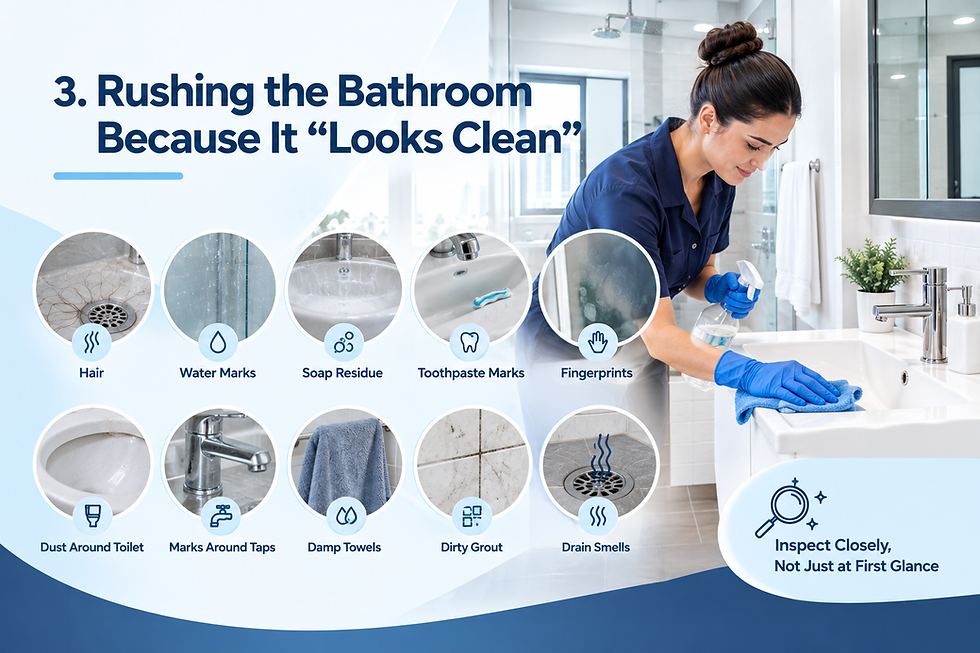
3. Rushing the Bathroom Because It "Looks Clean"
Bathrooms are among the first places guests inspect.
They are also one of the easiest areas for a small cleaning mistake to become obvious.
A bathroom may look clean from the doorway while still having:
Hair around the shower or drain
Water marks on shower glass
Soap residue
Toothpaste around the basin
Fingerprints on mirrors
Dust around the toilet
Marks around taps
Damp towels
Dirty grout
Unpleasant drain smells
These details can completely change the guest's perception of the property.
How to avoid it
Don't judge a bathroom from one angle.
Inspect it under good lighting and check the areas guests actually use. Look closely at the shower screen, basin, toilet, taps, floor and drain.
A final visual check can catch the small details that a fast clean misses.
4. Forgetting the Kitchen After Cleaning the Benchtops

A clean benchtop does not necessarily mean a clean kitchen.
Airbnb guests often use the kitchen during their stay, which means they may notice areas that a quick turnover cleaner overlooks.
Commonly missed areas include:
Microwave interiors
Oven surfaces
Cooktops
Fridge shelves
Fridge handles
Coffee machines
Toasters
Kettle interiors and exteriors
Cupboard handles
Splashbacks
Sink areas
Bins
Leftover food in the refrigerator is particularly unpleasant for an incoming guest.
So is a microwave with food splashes or a bin carrying an odour from the previous booking.
How to avoid it
Clean the kitchen as a guest would use it.
Open the fridge.
Check the microwave.
Look inside cupboards where appropriate.
Wipe appliance controls.
Empty and reline bins.
Then check whether basic supplies such as dishwashing liquid, bin liners and other property-specific essentials need replenishing.
5. Trying to Cover Bad Odours Instead of Removing Them

A fresh-smelling Airbnb creates an immediate sense of cleanliness.
But there is an important difference between freshness and fragrance.
Spraying an air freshener over a bad smell doesn't solve the underlying problem.
Odours can come from:
Kitchen bins
Food residue
Bathroom drains
Damp towels
Wet laundry
Carpets
Upholstery
Refrigerators
Poor ventilation
Forgotten food
Strong artificial fragrances can sometimes make the situation worse because guests may feel that something is being covered up.
How to avoid it
Find the source first.
Empty bins, check the fridge, inspect drains, remove damp materials, ventilate the property and make sure bathrooms and kitchens are properly dried.
The goal should be a clean, neutral and fresh environment, rather than an overpowering fragrance.
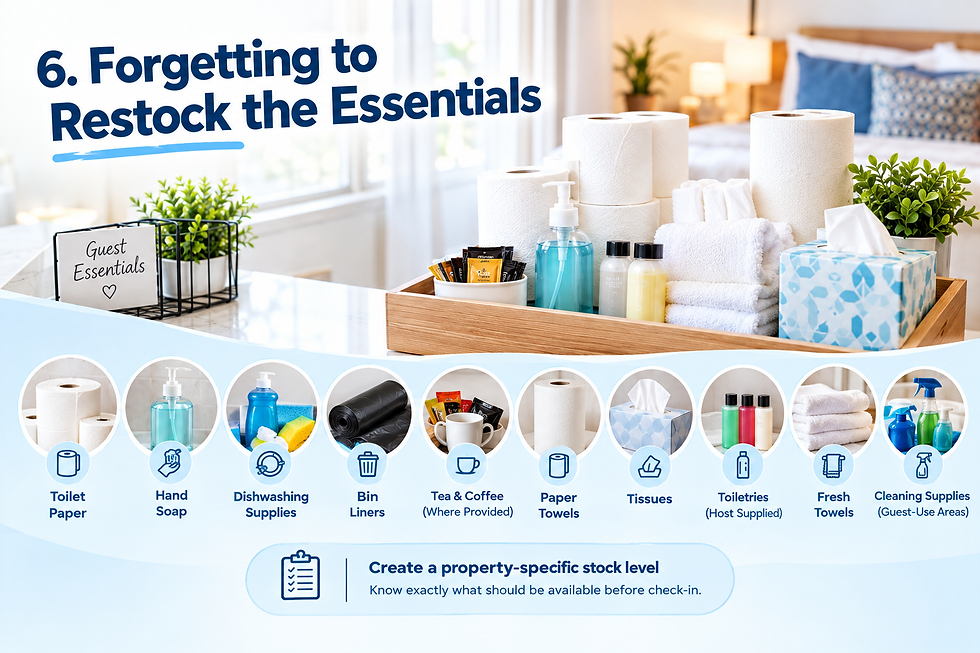
6. Forgetting to Restock the Essentials
Cleaning isn't the only thing that makes an Airbnb guest-ready.
Imagine arriving after travelling and discovering there is almost no toilet paper, the hand soap is empty, or there are no bin liners available.
The property might be spotless, but the experience still feels incomplete.
Common supplies to check include:
Toilet paper
Hand soap
Dishwashing supplies
Bin liners
Tea and coffee, where provided
Paper towels
Tissues
Toiletries supplied by the host
Fresh towels
Cleaning supplies for guest-use areas, where applicable
Create a property-specific stock level
Instead of simply asking, "Is there some left?", establish a minimum stock level for each property.
For example, your cleaner or property manager should know exactly how many rolls, towels or consumables should normally be available before check-in.
This removes guesswork and makes turnovers more consistent.
7. Skipping the Final Guest-View Inspection

This is perhaps the most important mistake.
A cleaner may finish every individual cleaning task correctly, but that doesn't always mean the property is ready for a guest.
The final inspection should be different from the actual cleaning process.
Instead of thinking like a cleaner, think like the arriving guest.
Walk through the front door.
What do you see?
Does the property smell fresh?
Does the entrance look welcoming?
Are the floors clean?
Does the bathroom immediately look spotless?
Is the bed properly presented?
Are towels arranged neatly?
Is the kitchen ready to use?
Are remotes where they should be?
Are the bins empty?
Are there any belongings left behind by the previous guest?
A simple final check
Before check-in, verify:
Entry → Living Area → Kitchen → Bathroom → Bedroom → Amenities → Final Presentation
This guest-view inspection can catch problems that aren't obvious when you have been cleaning room by room.
For hosts who aren't physically present at the property, completion photos can also provide a useful record of the property's condition after turnover.
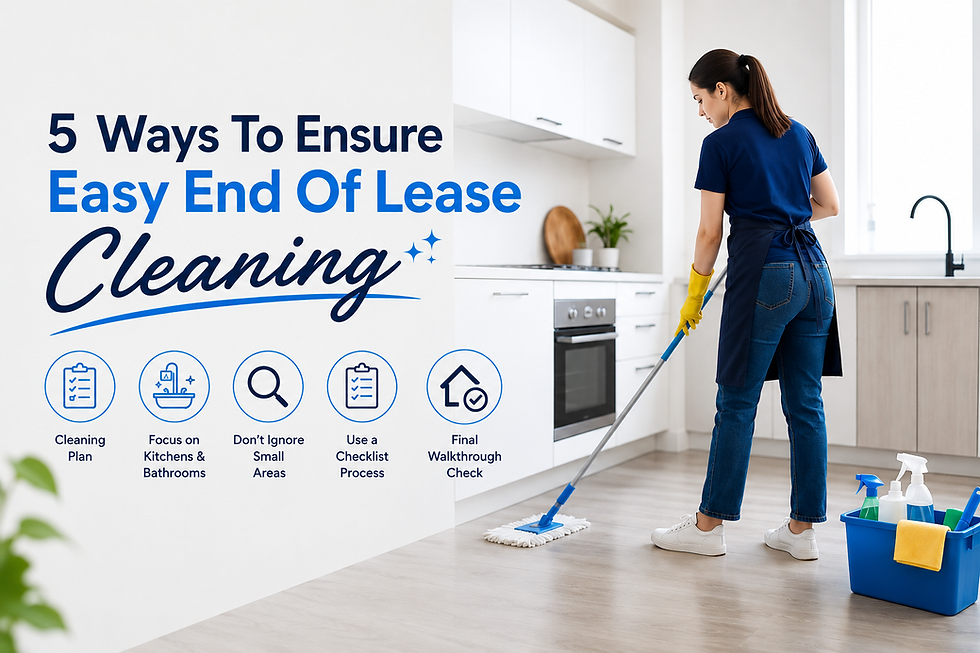
Read More: 5 Ways To Ensure Easy End Of Lease Cleaning
Why Same-Day Airbnb Turnovers Can Be Challenging in Sydney
The biggest challenge isn't always the cleaning itself.
It's the time available to complete everything properly.
When one guest checks out and another is arriving later the same day, the cleaning team may need to handle the entire turnover within a limited window.
That can include:
Inspecting the property
Removing used linen
Starting laundry
Cleaning bedrooms
Cleaning bathrooms
Resetting the kitchen
Cleaning living areas
Vacuuming and mopping
Restocking supplies
Replacing linen
Checking for damage or missing items
Completing the final inspection
If the process isn't organised, the final inspection is often the first thing to get rushed.
That's a problem because the final check is what catches many of the small mistakes that guests notice first.
Airbnb Cleaning Should Be a System, Not a Guessing Game
One of the easiest ways to improve turnover quality is to create a repeatable cleaning system.
The cleaner shouldn't have to remember everything from scratch for every property.
A good system can include:
Before Cleaning
Check for damage
Look for items left behind
Check linen requirements
Inspect the property
Identify maintenance issues
During Cleaning
Strip used linen
Clean from top to bottom
Work through each room systematically
Clean high-touch surfaces
Reset bathrooms and kitchen
Vacuum and mop floors last
Before Check-In
Replace linen
Restock essentials
Check appliances and basic amenities
Inspect presentation
Check for odours
Complete final walkthrough
Report anything requiring maintenance
This type of process reduces reliance on memory and helps maintain a more consistent standard between bookings.
Don't Confuse Cleaning Problems With Maintenance Problems
There is another important part of Airbnb turnover that hosts sometimes overlook.
Cleaners can be the first people to notice that something isn't working properly.
For example:
A leaking tap
Broken light
Damaged furniture
Missing remote
Stained or damaged linen
Faulty appliance
Loose fixture
Damaged wall
Broken bathroom accessory
These aren't necessarily cleaning problems, but they should be reported before the next guest arrives.
A good turnover process should therefore include issue reporting, not just cleaning.
That gives the host or property manager an opportunity to fix problems before they become guest complaints.
How Servloop Helps Sydney Airbnb Hosts Stay Guest-Ready
Managing Airbnb turnovers while handling bookings, guest communication, maintenance and property management can quickly become overwhelming.
That's where Servloop can help.
At Servloop, our approach to short-stay cleaning is focused on more than simply making a property look tidy.
The goal is to help Sydney Airbnb hosts and short-term property managers maintain a reliable, guest-ready standard between stays.
A professional turnover process can help with:
Airbnb changeover cleaning
Bedroom and bathroom cleaning
Kitchen cleaning
Floor cleaning
Linen and bed presentation
Restocking
High-touch surface cleaning
Final property checks
Reporting visible maintenance or property issues
For hosts, the benefit is simple: instead of wondering whether the property is ready, you have a structured process designed around the next guest's arrival.
Whether you manage one Airbnb or multiple short-stay properties, consistency matters.
Servloop helps take the cleaning workload off your hands so you can focus on managing the guest experience and your property.
Sydney Airbnb Check-In Cleaning Checklist
Use this quick checklist before marking your property as ready.
Bedroom
Fresh sheets installed
Pillowcases checked
Mattress protector inspected
Bed properly presented
Bedside tables cleaned
Lamps and switches checked
Floors cleaned
Wardrobes checked
Under-bed area inspected
Bathroom
Toilet cleaned
Shower cleaned
Shower glass free from marks
Basin cleaned
Taps polished
Mirror cleaned
Hair removed
Floors cleaned
Fresh towels provided
Soap and toilet paper restocked
Kitchen
Benchtops cleaned
Cooktop cleaned
Microwave checked
Fridge checked
Sink cleaned
Appliances wiped
Cupboard handles cleaned
Bins emptied
Kitchen supplies restocked
Living Areas
Floors vacuumed/mopped
Furniture dusted
Remote controls checked
Tables cleaned
Windows/glass checked
Cushions arranged
Visible marks removed
Final Guest Check
No previous guest belongings
No unpleasant odours
All bins emptied
Essential supplies available
Lights working
Remotes available
Property presentation matches expectations
Maintenance issues reported
Final inspection completed
Final Thoughts
An Airbnb doesn't have to be dirty to receive a cleanliness complaint.
Sometimes, it's the one small detail that changes the guest's perception — a hair on fresh linen, a streak on the shower screen, an empty toilet-roll holder, a forgotten food container in the fridge or an unpleasant smell coming from the bin.
The solution isn't necessarily cleaning harder.
It's cleaning systematically.
A consistent turnover routine, proper linen management, adequate restocking, attention to high-touch areas and a final guest-view inspection can make a significant difference to the check-in experience.
For Sydney Airbnb hosts who don't have the time or resources to manage every turnover themselves, Servloop provides professional cleaning support designed to help keep short-stay properties ready for their next guests.
Because when a guest opens the door, the property should feel like it was prepared specifically for them — clean, fresh, organised and ready to enjoy.
Frequently Asked Questions
1. What is the biggest Airbnb cleaning mistake hosts make?
One of the biggest mistakes is focusing only on visible cleaning while overlooking small details such as high-touch surfaces, linen, odours, restocking and the final guest-view inspection.
2. Should an Airbnb be cleaned after every guest?
Yes. A full turnover clean should normally be completed between guest stays. This prepares the property, replaces used linen and towels, removes rubbish and resets the property for the next booking.
3. What should I check before an Airbnb guest arrives?
Check bedrooms, bathrooms, kitchen, living areas, floors, linen, high-touch surfaces, bins, supplies, odours and guest amenities. A final walkthrough should also confirm that no previous guest belongings have been left behind.
4. How do I prevent Airbnb cleaning mistakes?
Use a written property-specific checklist and follow the same cleaning sequence for every turnover. A final inspection before check-in can also catch small issues that were missed during cleaning.
5. How should Airbnb linen be handled?
Used linen should be separated from clean linen and checked for stains, hair, damage and odours. Hosts should also maintain enough spare linen to handle their normal turnover schedule without creating unnecessary time pressure.


Comments