
Cleaning for Allergies and Asthma: Dust, Pollen and Air Quality Tips for Australian Businesses


Allergies and asthma can be a concern in Australian workplaces, particularly when dust, pollen and other airborne particles build up indoors. Offices, retail stores, warehouses and other commercial spaces can collect allergens on carpets, desks, upholstery, air vents and frequently used surfaces.
Regular and thorough cleaning can help reduce these triggers and contribute to a cleaner, more comfortable workplace. Here are practical cleaning tips Australian businesses can follow.
Why Workplace Cleaning Matters for Allergies and Asthma
Common indoor triggers can include dust, dust mites, pollen, mould spores and other fine particles. These contaminants may enter a workplace through open doors and windows, ventilation systems, clothing and footwear.
Without consistent cleaning, particles can accumulate and become airborne again when people walk across carpets, move furniture or use shared spaces.
Professional cleaning services can help businesses maintain a more hygienic indoor environment through scheduled cleaning and attention to areas that routine cleaning may miss.
1. Control Dust Before It Builds Up

Dust can settle almost anywhere, including desks, shelves, window ledges, electronics, light fittings and areas behind furniture.
Businesses should focus on regular dust removal rather than waiting until surfaces visibly look dirty.
Using microfibre cloths can help capture dust instead of simply moving it around. High-touch and high-traffic areas should also be cleaned frequently.
2. Vacuum Carpets and Upholstery Regularly

Carpets, rugs and upholstered furniture can trap dust, pollen and other particles.
Regular vacuuming is particularly important in busy workplaces. Where appropriate, businesses can consider vacuum cleaners equipped with HEPA filtration, which are designed to capture very fine particles.
Periodic professional carpet and upholstery cleaning can also help remove dirt and allergens that ordinary vacuuming may leave behind.
3. Reduce Pollen Entering the Workplace

Australia experiences seasonal pollen exposure, and pollen can easily make its way indoors.
During periods of high pollen, businesses can reduce indoor exposure by keeping doors and windows closed when practical, cleaning entrance areas regularly and using quality entrance mats.
Floors near entrances may require more frequent vacuuming or mopping because pollen and outdoor debris can be carried inside on shoes.
4. Pay Attention to Indoor Air Quality

Cleaning and indoor air quality are closely connected.
Dust accumulated around air vents, fans and other ventilation areas can contribute to particles circulating throughout a workplace.
Businesses should ensure ventilation systems are maintained appropriately and filters are inspected or replaced according to manufacturer or professional recommendations.
Cleaning around vents and other accessible areas can also help prevent excessive dust accumulation.
5. Don't Ignore Hidden Dust Areas
A workplace may look clean while allergens remain in less visible locations.
Commonly overlooked areas include:
Behind and underneath furniture
Window blinds and curtains
Air vents and grilles
Tops of cabinets
Upholstered chairs
Skirting boards
Storage areas
Corners and edges of carpeted rooms
A professional commercial cleaning schedule can include these areas instead of focusing only on visible surfaces.
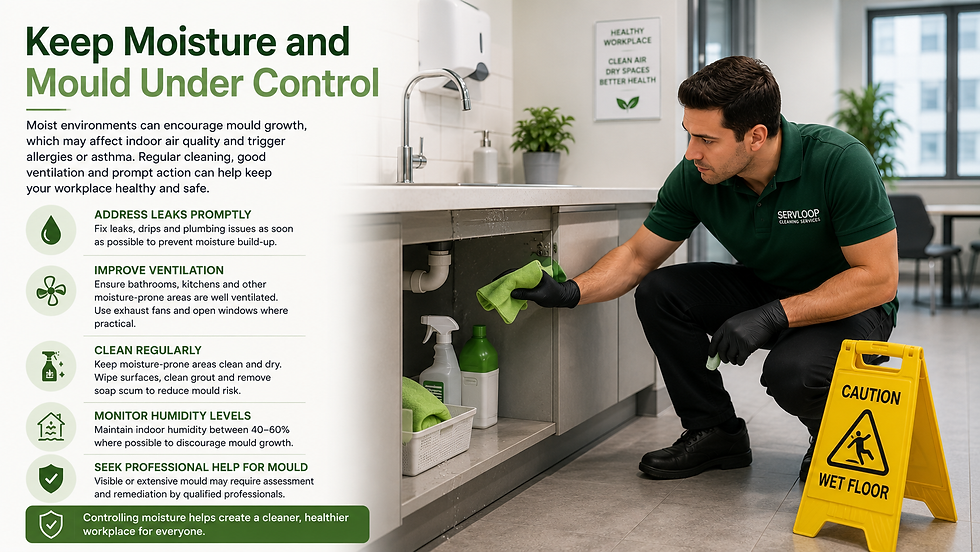
6. Keep Moisture and Mould Under Control

Moist environments can encourage mould growth, which may affect indoor air quality and can be a trigger for some people with asthma or allergies.
Leaks, condensation and damp areas should be addressed promptly. Bathrooms, kitchens and other moisture-prone areas also require consistent cleaning and ventilation.
Visible or extensive mould problems may require assessment and remediation by appropriately qualified professionals rather than ordinary cleaning alone.
7. Choose Cleaning Products Carefully

Strong fragrances and certain cleaning chemicals may irritate some people with asthma or sensitivities.
Businesses should consider appropriate cleaning products for their workplace and ensure they are used according to label instructions.
Professional cleaners can also help businesses establish cleaning procedures that balance hygiene requirements with the needs of employees and visitors.
How Often Should Australian Businesses Clean?
There isn't one cleaning schedule suitable for every workplace. Cleaning frequency depends on factors such as:
Number of employees and visitors
Workplace size
Type of business
Flooring and furniture
Indoor and outdoor environment
Amount of foot traffic
Seasonal pollen levels
A busy office or retail environment, for example, may require daily cleaning of high-traffic areas along with scheduled deep cleaning.
How Professional Cleaning Services Can Help
Professional cleaning isn't only about making a workplace look presentable. A structured commercial cleaning program can target dust, dirt and other contaminants that accumulate throughout a property.
Professional cleaners can provide services such as regular dusting, HEPA vacuuming where appropriate, floor cleaning, carpet cleaning, upholstery cleaning and detailed cleaning of difficult-to-reach areas.
For businesses concerned about allergies, asthma or indoor cleanliness, a customised cleaning schedule can provide more consistent results than relying solely on occasional cleaning.
Create a Cleaner Workplace for Employees and Visitors
Dust, pollen and indoor air contaminants cannot always be eliminated completely, but good cleaning practices can help reduce their accumulation.
For Australian businesses, combining regular workplace cleaning with appropriate ventilation, moisture control and building maintenance can contribute to better indoor environmental quality.
If dust and allergens are becoming difficult to manage in your workplace, consider arranging a professional commercial cleaning service. A tailored cleaning plan can focus on high-traffic areas, carpets, surfaces and commonly overlooked spaces while fitting around your business hours.
Breathe Easier with Professional Commercial Cleaning
A cleaner workplace can make a real difference when it comes to managing dust, pollen and other indoor contaminants. ServLoop provides professional commercial cleaning solutions designed to help Australian businesses maintain cleaner, healthier and more comfortable workplaces.
From regular office cleaning to detailed commercial cleaning, our team can create a cleaning plan tailored to your workplace, schedule and requirements.
Ready for a cleaner, healthier workplace?
👉 Contact ServLoop today for professional cleaning services tailored to your business.
Visit: www.servloop.com.au
FAQs
Can professional cleaning reduce allergens in an office?
Regular professional cleaning can help reduce accumulated dust, pollen and other particles on workplace surfaces, carpets and furnishings. It cannot guarantee an allergen-free environment, but it can form an important part of an overall indoor environmental management strategy.
Is vacuuming enough to remove allergens?
Vacuuming is important, particularly for carpets and upholstery, but it should be combined with surface cleaning, floor care and attention to less visible dust-collection areas.
Are HEPA vacuums better for workplaces with allergies?
HEPA filtration is designed to capture very fine airborne particles. Using suitable HEPA-filtered equipment can therefore be useful as part of an allergy-conscious cleaning approach.
How can businesses reduce pollen indoors?
Regularly cleaning entrance areas, using effective entrance mats, keeping doors and windows closed during high-pollen conditions when practical, and maintaining ventilation systems can help limit pollen accumulation indoors.
How often should an office be professionally cleaned?
It depends on workplace size, occupancy and foot traffic. Busy commercial environments may require daily cleaning, while deeper carpet, upholstery and detailed cleaning can be scheduled periodically according to the property's needs.
Can cleaning improve indoor air quality?
Cleaning can help reduce dust and particles that may otherwise become airborne. However, indoor air quality also depends on ventilation, HVAC maintenance, moisture management and other building-related factors.


Comments