
How to Remove Mould in a Sydney Apartment Bathroom


Bathroom mould is one of the most common problems in Sydney apartments. Humid summers, wet winters and bathrooms with weak ventilation give mould everything it needs to grow. It often starts as a few dark spots on grout or the ceiling and spreads quickly if ignored.
This guide shows you how to remove it safely, what mistakes to avoid, how to keep it from coming back, and who's responsible if you're renting.
Why Sydney Apartment Bathrooms Get Mouldy
Mould grows where there's moisture, warmth and poor airflow. Many apartment bathrooms tick all three boxes:
Internal bathrooms with no window
Weak or blocked exhaust fans
Long hot showers with the door closed
Humid coastal air
Wet towels and bath mats left in the room
Slow-drying grout, silicone and ceilings
Our guide on why Sydney homes need regular cleaning covers how Sydney's climate affects the whole home.
Before You Start: Safety First
Mould can irritate the eyes, nose, throat and lungs, and it can be a bigger concern for people with asthma, allergies or weakened immunity. Before cleaning:
Open the window and turn on the exhaust fan.
Wear gloves, protective glasses and a mask.
Keep children and pets out of the room.
Don't dry-scrub or brush mould, because it can release spores into the air.
If someone in the household has asthma, allergies or a health condition, consider having someone else handle the clean or hiring a professional.
Never mix cleaning products. Mixing bleach with vinegar or ammonia can create dangerous fumes.
What You'll Need
Microfibre cloths and a soft brush or old toothbrush
Spray bottle
White vinegar, or a detergent and warm water mix
Bicarbonate of soda for stubborn grout
Squeegee
Rubbish bags for used cloths
How to Remove Bathroom Mould, Step by Step
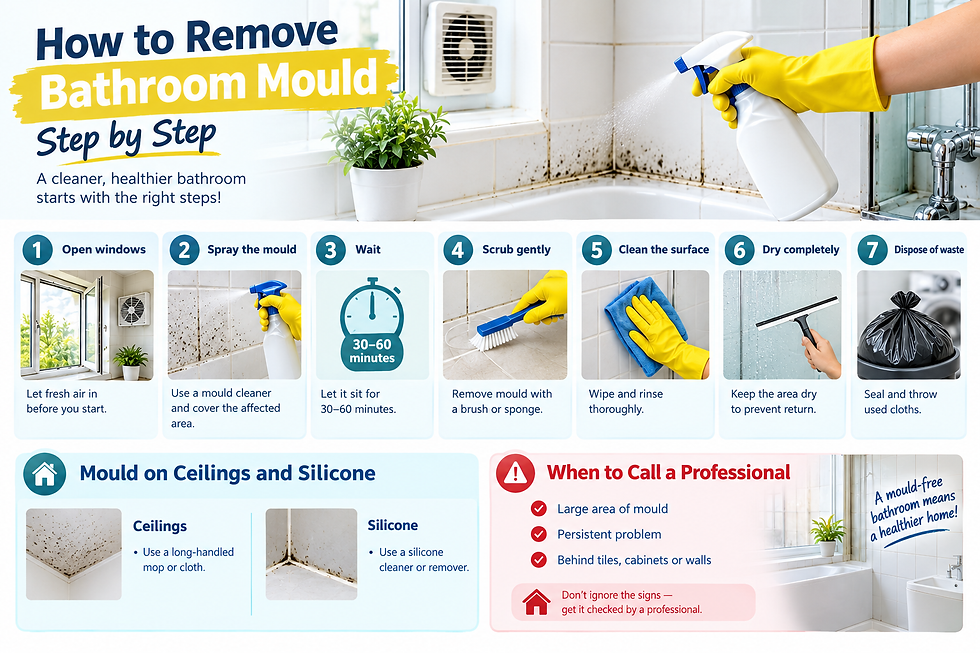
1. Ventilate the room. Open windows and run the fan before you begin.
2. Spray the mould. Lightly mist the mouldy areas with undiluted white vinegar, or a detergent and water solution. Misting first helps stop spores from becoming airborne.
3. Leave it to work. Wait around 30 to 60 minutes, then wipe with a damp microfibre cloth.
4. Treat grout carefully. For grout, make a paste of bicarb and water, apply it, leave it for a short time and scrub gently with a soft brush.
5. Clean surrounding surfaces. Wipe tiles, shower screen tracks, silicone edges and the ceiling above the shower.
6. Rinse and dry completely. Moisture left behind lets mould return. Dry surfaces with a clean cloth or squeegee.
7. Dispose of cloths. Put used cloths in a bag and wash them hot, or throw them out.
Mould on Ceilings and Silicone
Ceilings: Apply the same mist-and-wipe method with a long-handled mop or cloth. Repeat if the stain returns. If it keeps coming back, the ceiling may have a moisture or ventilation issue behind it.
Silicone: Mould that has grown into silicone often can't be fully cleaned. If it stays black after cleaning, the silicone needs to be removed and replaced.
When to Call a Professional
Don't tackle the mould yourself if:
It covers a large area or keeps returning quickly
It comes with a musty smell and visible water damage, leaks or damp walls
It's behind tiles, cabinets or wall linings
Someone in your home has respiratory or immune health concerns
In those cases the cause is usually a leak or ventilation fault, and cleaning the surface won't solve it.
How to Stop Bathroom Mould Coming Back

Run the exhaust fan during every shower and for 15 to 20 minutes afterwards.
Open the window or door after showering where possible.
Squeegee the shower screen and tiles after use.
Hang towels to dry outside the bathroom, and wash bath mats regularly.
Fix dripping taps and leaks quickly.
Clean the bathroom weekly so soap scum doesn't build up.
Clean or replace exhaust fan covers as dust builds up.
A regular cleaning service that includes bathrooms can keep on top of this before mould sets in.
Renting? Who's Responsible for Mould in NSW?
It depends on how the mould developed.
Landlord: If mould developed because of a defect the landlord failed to repair in a reasonable time, such as a faulty window, or because the property didn't have adequate ventilation, the landlord is responsible for fixing it.
Tenant: If mould built up because the tenant allowed moisture to accumulate, for example by never opening windows or never using the bathroom fan, the tenant may be responsible.
Early in a tenancy: Mould that appears close to the start of a tenancy may be considered pre-existing.
Report it: Tenants should tell the landlord or agent as soon as they notice mould or damp, ideally in writing with photos.
Mould should also be recorded on the condition report. If you disagree about responsibility, NSW Fair Trading offers a complaints service and you can apply to NCAT. This is general information only, so contact NSW Fair Trading (13 32 20) for your situation.
If you're moving out, thorough bathroom cleaning matters for your bond. See our guide on whether a landlord can deduct cleaning costs from your bond in NSW and our 5 ways to ensure easy end of lease cleaning.
Frequently Asked Questions
Is bathroom mould dangerous?
It can irritate the airways and trigger symptoms in people with asthma or allergies. If you're concerned about your health, speak to a doctor.
Does vinegar kill mould?
White vinegar is a commonly used option for light surface mould. Always dry the area afterwards, and never mix it with bleach.
Why does mould keep coming back?
Usually because moisture or ventilation hasn't been fixed. Cleaning removes mould, but it returns if the bathroom stays damp.
Can I remove mould from a rental myself?
For light surface mould, yes. But tell your landlord or agent about it first, especially if it may be caused by a leak or poor ventilation.
How often should I clean the bathroom to prevent mould?
Weekly for most households, plus a daily wipe-down or squeegee of the shower.
Need Help With a Mouldy Bathroom?
Servloop provides fixed-price, checklist-based cleaning across Sydney, including regular cleaning and end of lease cleaning, with post-service reports. Arrange a callback for a quote.


Comments